
Handcrafted cotto (terracotta) is a premium material, chosen by architects and interior designers for its authentic charm and distinctive character. To enhance its beauty and ensure long-term durability, it is essential to perform proper surface treatment, both for indoor flooring and outdoor environments.
In this guide, we explain how to treat cotto flooring, when it is necessary to do so, and which sealing and finishing products to choose for professional results.
Cotto—especially handcrafted, unglazed, and untreated varieties—is a natural material with high porosity, featuring an absorption capacity that can exceed 15-18% by volume. This characteristic, resulting from the traditional firing of clay at high temperatures, gives the floor a warm, tactile aesthetic but also makes it vulnerable to liquids, oils, fine dust, and weathering. Without adequate treatment, cotto tends to stain easily, develop shadows (haloing), and gradually lose its color uniformity.
Therefore, the treatment of cotto serves a fundamental protective and preservative function. Firstly, it helps to partially seal the pores of the material, preventing substances such as water, various liquids, or organic grime from penetrating deep into the substrate. This drastically reduces the risk of permanent staining and simplifies daily maintenance: a treated floor is quicker to clean and requires fewer chemical agents.
In terms of durability, a correctly treated cotto floor is more resistant to abrasion, weather conditions (if outdoors), and frequent cleaning cycles. The surface remains more stable over time, avoiding efflorescence (powdering/flaking) and preventing micro-fractures caused by water infiltration or thermal shock. This is a concrete way to extend the lifespan of the material, protecting an investment that, in high-end projects, represents a key stylistic and identity element.
Another important aspect is the aesthetic effect. Impregnating sealers or color-enhancing treatments have the ability to highlight the natural nuances of the clay, restoring chromatic depth and uniformity, especially on surfaces exposed to direct light or mechanical wear. In high-level residential or commercial contexts, this helps maintain the material’s authentic allure unaltered.
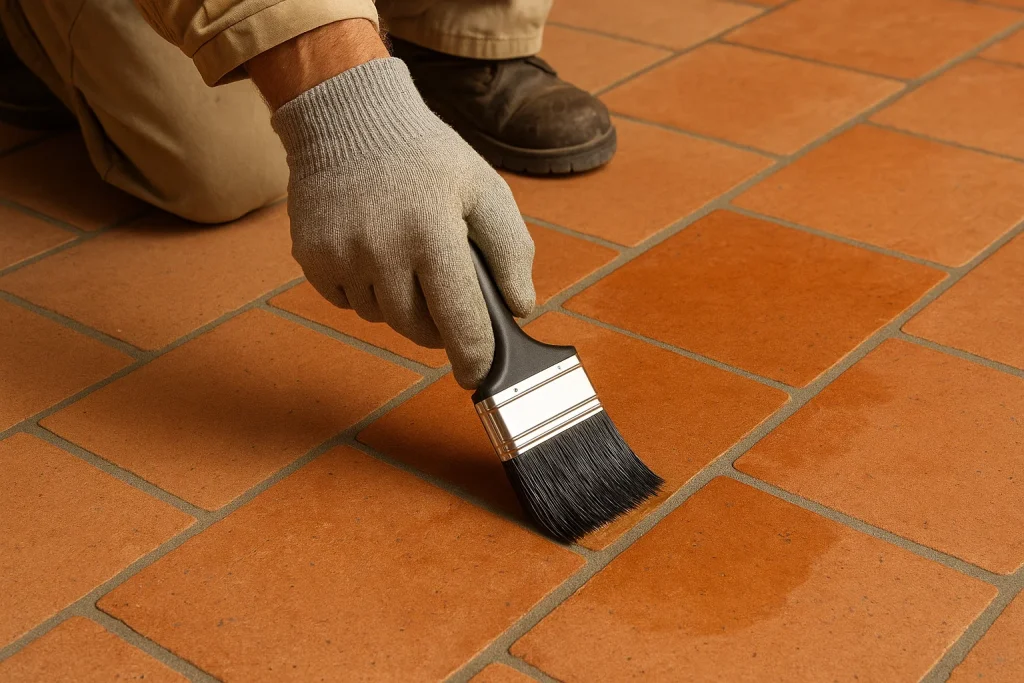
The treatment can be performed at different stages, depending on the condition of the floor and the required level of protection. Timely intervention preserves the material’s aesthetics and ensures greater resistance over time. Treatment is specifically recommended:
It is important to distinguish between outdoor cotto treatment and indoor cotto treatment, as protection requirements change based on factors such as exposure to weathering, humidity levels, and the intended use of the surface.ori come esposizione agli agenti atmosferici, livello di umidità e tipo di utilizzo della superficie. Una corretta valutazione permette di scegliere i prodotti più adatti e di preservare nel tempo la bellezza e la durabilità del pavimento in cotto artigianale.
Treatment for indoor cotto is essential to preserve its natural beauty and ensure a surface resistant to stains and daily wear. The process begins with deep cleaning (acid or alkaline washing) to eliminate dirt, residues, and stains using a neutral detergent or a formula specifically designed for terracotta. Once cleaned, the floor must dry completely for 24–48 hours to prevent moisture entrapment and allow subsequent products to bond correctly.
At this stage, an impregnating sealer is applied. It penetrates deep into the pores, creating a protective barrier against liquids and abrasions without altering the natural “breathability” or appearance. For a more sophisticated aesthetic, a finishing wax can be applied to create a slight sheen (satin or gloss) and further increase surface protection.
Outdoor cotto is exposed to atmospheric agents, humidity, and debris. A specific exterior-grade treatment is essential for durability. Key tasks include:
In case of structural damage or persistent rising damp, it is advisable to consult a professional specialist rather than attempting a DIY solution.
Selecting the right products makes the difference between a lasting result and a temporary one. Each phase requires specific formulas based on the intended use and the state of the substrate.
Choosing the right treatment means relying on those who understand every nuance of cotto. Fornace Brioni, with its long artisanal tradition, offers not only excellence in materials but also the expertise to enhance their beauty and durability over time. It is the ultimate way to protect your investment and preserve the authentic, refined effect that only high-quality handcrafted terracotta can provide.